Healthcare Phishing and Ransomware: 2026 Sector Trends
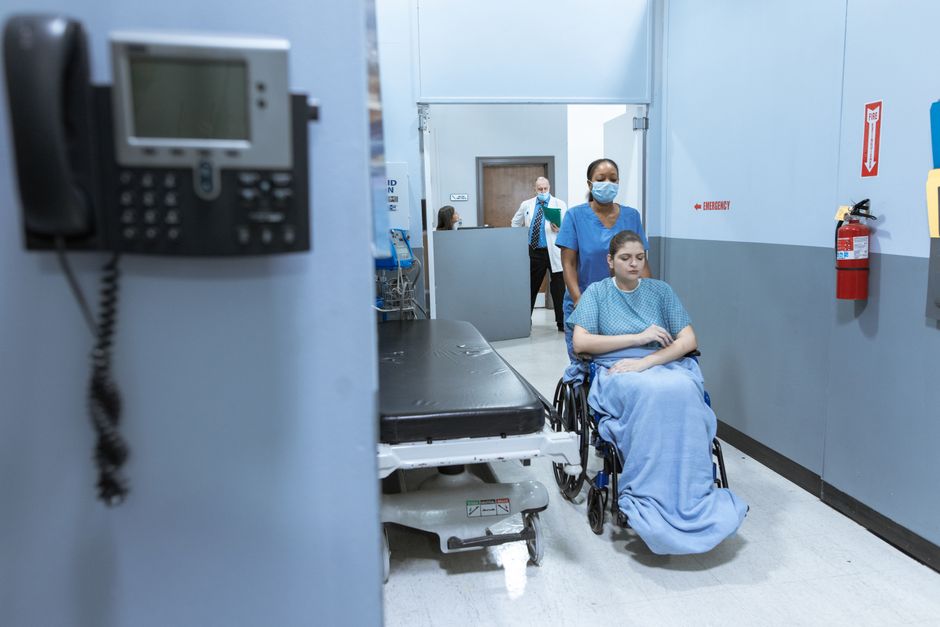
When a ransomware crew encrypts a retailer's systems, the cost is counted in lost sales and recovery hours. When the same attack hits a hospital, the cost can be counted in cancelled surgeries, diverted ambulances, and clinicians falling back to paper charts. That difference, the fact that downtime in healthcare is a patient-safety event, is why the sector has become one of the most relentlessly targeted in 2026, and why human-layer defences deserve far more attention than they typically get.
This piece looks at why healthcare sits at the top of attackers' lists this year, what the patient-safety stakes really mean, the HIPAA obligations in play, and where awareness and phishing defences fit into the response.
A Sector Under Sustained Pressure
Healthcare has been a favoured ransomware target for years, and 2026 has intensified rather than eased that pressure. Industry reporting through the year points to healthcare repeatedly ranking among the most-attacked verticals, with incident-response analyses placing it alongside public administration as a leading target. The reasons are structural and well understood:
- Care cannot stop. A hospital under pressure to restore patient services has strong incentives to pay quickly, which attackers exploit.
- The data is uniquely valuable. Protected health information (PHI) is rich, persistent, and lucrative, fuelling double- and triple-extortion schemes where data is stolen before encryption and release is threatened.
- The attack surface is sprawling. Legacy systems, connected medical devices, large and distributed workforces, and dense vendor ecosystems all widen the ways in.
Whatever the precise year-on-year percentage, the direction of travel across 2026 reporting is unambiguous: more incidents, larger ransom demands, and longer, more damaging outages. For statistics on reported healthcare breaches, the U.S. Department of Health and Human Services maintains a public breach portal, often called the HHS breach portal, which records incidents affecting protected health information.
The Patient-Safety Stakes Are Real
The clearest illustration of the stakes came in February 2026, when the University of Mississippi Medical Center (UMMC) was hit by a ransomware attack. The incident, detected on 19 February 2026, forced the academic medical centre to take its Epic electronic health record system offline and disrupted phone and email communications. Clinics across the state closed for around nine days, outpatient procedures and imaging appointments were cancelled, and emergency departments operated using manual downtime procedures before operations were restored in early March.
When the electronic health record goes dark, clinicians lose instant access to medication histories, allergies, and prior results. Care continues, but it slows and grows riskier, which is precisely why healthcare downtime is a patient-safety issue, not just an IT one.
It is worth being precise about what is known and what is not. UMMC did not publicly confirm the initial access vector, so it would be wrong to attribute that specific intrusion to any one method. What can be said is that, across the healthcare sector generally, phishing and credential theft are repeatedly identified as leading routes for initial access. The broader 2026 picture is that email-based compromise and stolen credentials remain among the most common ways ransomware operators get their first foothold, which keeps the human layer firmly in scope.
HIPAA Puts Awareness on the Compliance Map
For covered entities and business associates, the security of PHI is not only an operational concern, it is a legal one. The HIPAA Security Rule requires appropriate administrative, physical, and technical safeguards for electronic protected health information, and among the administrative safeguards is a security awareness and training program for the workforce. In other words, training your people is a regulatory expectation, not an optional extra.
Healthcare leaders should also be tracking proposed updates to the HIPAA Security Rule under discussion in 2026, which would move several long-standing recommendations, such as multi-factor authentication, encryption, and network segmentation, toward firmer requirements. The exact final shape and timing depend on the rulemaking process, so confirm current status against official sources rather than secondary summaries. The authoritative reference for the Security Rule is the U.S. Department of Health and Human Services at hhs.gov.
The practical implication is consistent across both today's rule and the proposed direction of travel: a workforce that can recognise and report phishing is simultaneously a safety control, a breach-prevention control, and a compliance control.
Human-Layer Defenses That Actually Help
Because so many healthcare intrusions begin with a person, hardening the human layer is among the highest-leverage investments a health system can make. Effective programs in this sector share a few traits:
- Role-aware training, recognising that a billing clerk, a nurse, and an IT administrator face different lures and need different guidance.
- Realistic phishing simulation, so staff build the reflex to scrutinise emails and credential prompts under conditions resembling genuine attacks.
- Frictionless reporting, making it effortless to flag a suspicious message, because a fast report can stop an intrusion before encryption begins.
- Continuous reinforcement, not an annual video, given how quickly lures and pretexts evolve.
- Evidence you can produce, so the workforce-training expectation under HIPAA is demonstrable rather than assumed.
This is where a dedicated platform pays off in a high-turnover, multi-site environment. empowsec lets health systems run targeted phishing simulation campaigns, deliver role-based security awareness training to clinical and administrative staff alike, and retain the documentation and evidence for audits that HIPAA-minded compliance teams need to show their program is real and effective. The aim is not to turn nurses into security analysts, it is to make reporting a suspicious email as routine as washing hands.
Why Healthcare Is Uniquely Hard to Defend
It is fair to ask why healthcare keeps appearing at the top of the target list when awareness of the problem is so widespread. The answer is that the sector faces a set of constraints that most industries do not, and those constraints shape where defences have to focus.
- Availability cannot be sacrificed for security. In many sectors you can take a system offline to patch or contain a threat. In a hospital, that same system may be supporting active patient care, which complicates the usual security trade-offs and lengthens patching cycles.
- The workforce is large, mobile, and time-pressured. Clinicians move between devices and locations under genuine pressure, and a rushed worker scanning an inbox between patients is exactly the target a well-crafted lure is designed for.
- Identity and access sprawl. Shared workstations, rotating staff, students, and contractors create a complex identity picture in which stolen credentials can hide.
- Deep vendor and device ecosystems. Connected medical devices and a long tail of suppliers expand the attack surface well beyond traditional IT, and not every component can be hardened or quickly updated.
These realities explain why purely technical controls, while essential, are never sufficient on their own. You cannot simply patch your way out when patching is constrained, and you cannot eliminate the human entry point when a large, pressured workforce must read email to do its job. That is precisely why the human layer carries disproportionate weight in healthcare: it is one of the few controls you can strengthen everywhere, for everyone, without disrupting care.
It also reframes awareness as a resilience investment rather than a compliance chore. A clinician who pauses on a suspicious credential prompt, or reports a strange email in seconds, is compensating for exactly the structural weaknesses that make the sector hard to defend. Done well, human-layer defence is not the weakest link in healthcare security, it is one of the most adaptable.
Key Takeaways
Healthcare's status as a top ransomware target in 2026 is driven by patient-safety pressure, valuable data, and a wide attack surface. To respond:
- Treat downtime as a clinical risk, as the UMMC outage in February 2026 showed when the EHR went offline and care slowed for days
- Focus on the human layer, because phishing and credential theft are leading initial-access routes across the sector
- Meet HIPAA's training expectation with a genuine workforce awareness program, and watch proposed 2026 Security Rule updates via official HHS sources
- Make reporting effortless, since a fast report can halt an intrusion before encryption
- Keep audit-ready evidence of training and simulation, so your program is demonstrable under HIPAA and useful after any incident
In healthcare more than almost anywhere, the people defending the inbox are also helping defend the patient. Investing in that human layer is one of the most direct ways to protect both data and care.